Wednesday, 20 May 2015

21. Stranger than fiction: The rejection of the weak


Many of the latest* science fiction TV series and movies picture a futuristic dystopian world that has involved instead of evolved. Instead of peace, harmony and more tolerance, there is more separation and conflict. Either chaos or the system itself alienates the poor, the weak, and build walls to separate the uncivilized who need to fight for their survival (eg The Hunger Games series). But why are we collectively fantasising with this sort of future? 

Science fiction experts often point out that it is a genre that is actually based in very real aspects of life: our anxieties, fears, our view of the world. For example, they describe Star Trek as an optimistic 60s vision of the world, tolerant and diverse (a team composed by men and women of different races), going out to space as Victorian expeditioners to teach others about civilization. 

  • Invasions in general were a reflection of the anxieties over the tensions between empires first, the cold war later on and terrorist attacks to this day (the latest invasions attacked big landmarks, creating an subconscious link with the attack to the twin towers). 
  • In particular, aliens are mostly about our view of the "other", our fear of the other: other nations, foreigners, terrorists. Alien is of course a very scary other with a parasitic life cycle that ends up killing you. One of the exemptions was ET. ET is a positive take where the "other" was the hostile adult world seen through the eyes of the child: we cannot see the faces of most adults, adults are holding guns against children (only a re-masterisation done later changed many of the guns to look like walkie-talkies) and even the camera is at a child's height. But the child, Elliot, gets in contact with ET, this short-but-adult alien, who turns out to be someone who's lost and just wants to go home. Through this encounter with the ET, he also meets an adult, "Keys" -the government agent- who remembers how he felt as a child: an alien-adult that becomes an adult with a face, a dream and a story. 
  • The change of the millennium, or even the mystic 2012, brought a lot of apocalyptic movies, etc, etc. 
  • You see the point, right?


The so-called migrant crisis, with people fleeing from civil war zones and extreme poverty, seems to come close to the dystopian worlds of some of these sci-fi/SF stories.


This cartoon has been shared on social media. Simon Kneebone, the Australian cartoonist who drew it, tried to explain why people are sharing it


"The issues are complicated and complex. I think that we perhaps have mixed emotions, that we might not always be comfortable with. We feel for the refugees but are threaten a bit as well. The cartoon sidesteps getting bogged down in the angst, and says simply that we all fellow humans on this planet… And where we happen to be on the planet isn’t that important. I think it is being shared because it resonates with our inner human."

How much complex can it get? Has anyone ever come up with a good solution to a civil war? An authoritarian leader to unite everyone in fear? External intervention that imposes itself violently and denies self-determination? Let the war take its course and accept that mass killings will happen?
How complex can it get when the countries shutting their doors to the people fleeing these areas are seeing the sales of the weapons to the war zones going up 25%?
How complex can it get when the argument to reduce the budget for the rescue missions in the Mediterranean is that rescuing people actually encourage more to take the risk? Of course that meant, deaths should work as a deterrent.
How complex can it get when people feel pity or even mercy but does not want their country to receive migrants?


The premise of this blog is that everything that is happening in the world is somehow a fractal representation of what goes on at all levels of society, down to our own minds. There has always been a divide between the weak and the strong. And the strong tend to show no mercy, even cruelty towards the weak. Ethnic cleansing, racism, child abuse, chauvinism and violence against women, animal cruelty. There is always a weak one**.
It's curious to see how economic theory tried (and keeps trying) to justify tax cuts (increasing benefits) for the rich as a way of providing stimuli to do their jobs of creating more wealth better, whilst also justifying reducing benefits (taxing) to the poor as a stimuli for them work harder. Of course, here the words tax and benefits are important to the narrative but basically the paradoxical logic seems to be "we need to make things more difficult for the weak for them to try harder, and easier for the strong... for them to work less hard(?)". I don't know. I said it was paradoxical.

But of course, this is false strength. It is strength defined by the rejection of what's weak, instead of the acceptance, integration and the resolution of weakness.
Ai Weiwei's son, 6 year-old Ai Lao who lives away from his father in Berlin***, said to him by phone: "In fact, your persecutors aren't that much better off than you. You may have to run away from them -- but they have to run after you all the time, too." Through his son's insight, Ai Weiwei concluded that the angst and insecurity he feels reflects the state of China angst and insecurity, instead of its strength. Read the Spiegel's interview to Weiwei here.

When trying to understand any of these issues, past or present, the immediate thing to consider is our weak, vulnerable, poor, hungry side we tend to hide from the world. And reflect: How do we treat it? Are we rejecting it as a way to build up a (false) sense of strength? 
Are we hearing its needs, feeding it with love? Do we know what do we need?What's our lack? How do we feel in front of someone who can see it? Are we willing to stand for it or do we hide in shame? How do we treat ourselves when we get sick? When we failed? When we get rejected? Do we treat ourselves with love or try to build a wall around that experience to hide the shame? In the age where people are "branding" themselves and only present a perfectly curated version of their lives in social media, these questions are very relevant. 
Are we strong enough to offer a helping hand to our own weaknesses? So how do we ever expect society to do it if we are not able to?

AB


*I mention the latest films, but not forgetting films like Metropolis (Germany, 1927) that touched similar topics.

**Stories about slave classes rising (clones in Cloud Atlas, robots in i-Robot, Terminator, Matrix) are also related to this separation of weak and strong, but seen through the eyes of who's in control: the ones in power fear the rise of the ones that follow orders -the unconscious- they fear losing their supremacy and power. It is not very difficult to pair these anxieties with actual pieces of news: a few days ago, Johann Rupert said he cannot sleep at night at the thought of a social upheaval. In any case, the theme of slavery is surprisingly recurring in fiction and more and more in the news.

Let's bear in mind that robot's etymology: derived from the word robota, meaning forced labour. Even if this theme literally deals with the fear of technology, it is also about the fear of creation and parenthood, more specifically "imperfect" creation, responsibility and recognising the individuality of what's created. 

*** After the publication of this post, Wei Wei had his passport returned by the Chinese authorities and have reunited with his family.

Other links:
The Guardian: Italian coastguards: military action will not solve Mediterranean migrant crisis
Russell Brand - The Trews: Australia: still a prison colony?

Tuesday, 24 March 2015

20. The crisis of Masculinity and corporations trying to play a social role

In the last few years, we've been witnessing corporations and brands trying to appear more human, more social. They are spending big money in developing a social soul and in showing it. Sometimes the show comes before the actual development, though. In some cases, the appearance of having a social commitment is more important that the commitment itself. The story takes over the facts. The hashtags are more important that the actions. This seems to have been the case of Starbucks' attempt to drive a conversation about race.


Starbucks, as a business concept, was inspired by Italian coffee houses. In one of his latest trips to Italy, Mr Schultz, Starbucks' current CEO, noticed how these coffee houses are places of conversation. They have a role in Italian society: they are familiar places where people go regularly, know who is going to serve them coffee and can tell the difference between a barista and the other just by looking at how the coffee was served. Mr. Schultz wanted to copy&paste an authentic, emerging phenomena from a country were conversations are more central to its culture than mass communication, to the US and to a huge coffee shop chain... .  So he's been trying to manufacture this personal experience with baristas misspelling your name in coffee cups, so you feel "recognised" and with whom you're supposed to have a 30" debate about race. -"Racism is bad. Agree?", -"Yes", "Here's your cappuccino".

Corporations are lacking self awareness. They certainly know they have to make money and that's the priority. "We provide products and services to consumers and customers", they may attempt. "We are in the business of beautiful hair", a hair manufacturer may say. They may even try to turn beautiful hair into some sort of statement, some sort of idea for people to buy into. Will using Panthene as a shampoo help women to disregard the labels they are faced with in their professional life? No. Will opening a bottle of Coca Cola help people "choose" happiness? Really?  
Even if I am not offended by brands spending their advertising dollars in reflecting back to society the ideas that society feeds them with in focus groups, there is a feeling of self delusion, of self importance, that is slightly disturbing. Because, while people work under the spell of a well written story and a snappy hashtag, they do not connect with the reality that surrounds them and, believing their own narrative, don't assume the responsibilities that truly correspond to them. See this animation based on a a talk by the philosopher Slavoj Zizec.


Corporations seem to have forgotten what they are there for. 

This comes at no surprise with the current crisis of masculinity and "traditional masculine values" as a right wing american TV channel would describe it. This week we've  seen Jeremy Clarkson's "kind of fall" and read about Russell Crowe wondering where are those men he admired as a child. 

It is no surprise because corporations represent the masculine force in society. A pure masculinity principle focuses its energy and creativity in a single outcome (to make money). In a polarised world, they represent the dual opposite of the state (the female principle), where its creativity needs to multi-task to provide improvements in education, wellness, health indexes, take stands on civil rights, gay marriage, abortion, urban planning, infrastructure, climate change as much as improve GDP. And which is also, by the way, questioning what is -in today's society- the role of the state.

In the past, when the only overwhelming power was the state (ie monarchies), liberalism tried to establish a balance between the individual (even though it was mostly about white men of a certain class) and the authorities, establishing the freedoms that the "individual" should be granted and limiting the power of the state and its invasive potential. Corporations are not equal to the individual, though. People have to face an imbalance of power in front of concentrated corporate power too. But corporations hid (and hide) behind the "individuals" to push neoliberal ideas to demand more "freedoms" that actually weaken governments more than ever before. Not surprisingly, it was mainly corporations the ones that truly benefited from weaker governments. That's why when corporate responsibility is mentioned by the right, the left tends to look at it as another dubious rhetoric that leads to the foggy lands of self-regulation; while, if it is coming from the left, the right sees is as another attempt for the government to over-regulate. 

Famously, Milton Friedman fused and defused the individual and the corporation at will. He claimed that corporations are false persons so they cannot have social responsibility or social consciousness, in an article that he titled "The social responsibility of business is increase its profits". 
 "What does it mean to say that "business" has responsibilities? Only people have responsibilities. A corporation is an artificial person and in this sense may have artificial responsibilities, but "business" as a whole cannot be said to have responsibilities, even in this vague sense."
Corporations don't have responsibilites but have -apparently- interests and if it pretends to play a social role, it is only in the pursue of its own interests.
"To illustrate, it may well be in the long-run interest of a corporation that is a major employer in a small community to devote resources to providing amenities to that community or to improving its government. That may make it easier to attract desirable employees, it may reduce the wage bill or lessen losses from pilferage and sabotage or have other worthwhile effects. Or it may be that, given the laws about the deductibility of corporate charitable contributions, the stockholders can contribute more to charities they favor by having the corporation make the gift than by doing it themselves, since they can in that way contribute an amount that would otherwise have been paid as corporate taxes. In each of these--and many similar--cases, there is a strong temptation to rationalize these actions as an exercise of "social responsibility." In the present climate of opinion, with its widespread aversion to "capitalism," "profits," the "soulless corporation" and so on, this is one way for a corporation to generate goodwill as a by-product of expenditures that are entirely justified on its own self-interest.
It would be inconsistent of me to call on corporate executives to refrain from this hypocritical window-dressing because it harms the foundation of a free society. That would be to call on them to exercise a "social responsibility"! If our institutions, and the attitudes of the public make it in their self-interest to cloak their actions in this way, I cannot summon much indignation to denounce them. At the same time, I can express admiration for those individual proprietors or owners of closely held corporations or stockholders of more broadly held corporations who disdain such tactics as approaching fraud.
In this point, Milton and Zizek seem to agree (!) that window-dressing self-interest as social responsibility is close to fraud.

However, in these neoliberal ideas, the concentrated power of corporations was never seen as a threat or in contradiction to the principle "free to choose", when they usually are a threat as in the long run. These ideas support more oligopolies and monopolies in detriment of SAMEs and entrepreneurs.  

Something is missing

The question is, why then the CEOs, obedient of Milton Friedman, go and maximise the profit of a company and find every possible loop holes to avoid paying taxes, every possible regulation to pay as little as possible, then go outside and in their private lives turn to philanthropy and even call for all billionaires to give away most of their earnings? Are they recognising that this exuberant accumulation they fought so hard for is -at some point- useless or purposeless and needs to be put to better use? Do they need to fulfil some sort of god instinct and want to become saviours of the world? Are they bored? What's missing?

On the other side of the spectrum, men are seeing increasing levels of suicide. Some of them cannot longer deal with stress, with not being able to fulfil the provider role of the family and cannot ask for help.

and consumers? why are they asking these corporations to show they care? that they care for the environment, feminism, the farmers in a different country? Is it because we care or because we don't want to care? Superficially, we recognise that the values of the brands we choose reflect on the fabricated image of ourselves we want to project to the world. So we want to be seen as if we care. So brands and big multi-nationals run around trying to make something up to keep people engaged, which in many cases it ends up being just... make-up. 


Masculine archetypes

The point is that it would be a disaster for a society if the masculine principle disappeared. What we need instead is masculinity in its best expression, the one that emerges when men (and corporations) are self aware and connected to their centre. In this article, John Walters cites a book on masculinity and two different models: the masculine man and the macho man:


 ...the dichotomy outlined by Robert Bly in his seminal book Iron John - between the 'Wild Man' and the 'Savage Man'. For Bly, the two were opposites: one a benign archetype which every man must access if he is to become an adult; the other a weakling affecting hardness. The Wild Man has, through pain, discovered his own centre, the Savage Man is filled with rage because his heart is numb. According to Bly, the Wild Man's vital qualities have been caged in the modern male by the processes of capitalism, industrialisation and organised religion. Most men tend either to remain chained or burst out into savagery.
And more: 
There's a world of distance between alpha-male masculinity and the macho man. A masculine man is steadfast and rooted, centred within himself. A macho man is emotionally and existentially incontinent, spewing his insecurities in every direction via the codes of aggression and narcissism. A real man could survive on lettuce for six months; a macho man needs a large steak in front of him, less for nourishment than to announce his manhood.
A macho man is a weak man pretending to be masculine - and is generally found to be someone who has spent too much time around women, trying to ingratiate himself and attract their attention instead of burrowing into his own soul. Deprived of a convincing male mentor, he has never learned how to be a man, and so must project a fake masculinity to conceal his deficit. An alpha-male is something different, being a man who has gained control over his masculinity and father energy, and is therefore able to instil confidence in others and suggest himself as a potential leader if the effluent hits the extractor. 
As a feminist, I would argue, that men are not pure masculinity. And that feminine functions have been denied and externalised in women to the detriment of men: 

  • Nutrition, feeling we are worthy of food and receiving attention. Hunger, leads to anger or an obsessive pursue of accumulation and traps individuals in an infant estate where they can never assume responsibility over another person. They cannot become effective fathers.
  • Processing of negativity: denying weakness opens up to violence. Weakness is subjected to violence to make it "disappear". When there is no legitimate target, this ends up in self inflicted violence. 
  • Expression of emotion: linked to being weak, emotions are not recognised as vital forces to be used and to be named.

Rescuing corporations

In a constructive spirit, I'd say that corporations should look at the archetype of the good father or the wild man for guidance of what's their role in society:

1. They have to have a healthier relationship and better partnerships with the states in which they operate. They should not see them as enemies but complements. They cannot continue to turn the blind eye to them, dis-empower them, corrupt them, find ways to avoid responding to their tax responsibilities nor expect the state to be at their service. In a kind of institutional feminism: feminine entities also need to be recognised and set limits whilst connecting through dialogue to corporations in touch with their centre. 
In this sense, a response like Bill Gates' on tax avoidance feels instinctively wrong (towards the end of the video). 


Denying the duty of a corporation in taking part in the collective projects of the country in which they operate, is social neglect. Without disregarding that, very commendably, he chose to expend some of his personal fortune in very efficiently run world saving projects. However what he does as himself (giving money away in the projects he alone decides are worthwhile) and what he does as a leader of a company (not paying tax to fund the projects that a democratically elected government decides are priority) cannot be added up together. They are not the same. This is not at all about negating the freedom and the benefits to pursue philanthropy, but rather to question that when philanthropy happens at the expense of taxes, there are consequences.  A fragmented personality does not offer a neutral balance to the world. In any case, we can always argue that no government was paying attention to -say- Malaria vaccinations in Africa and it is fantastic that the philanthropic projects of Mr. Gates, the person, looks at that gap. But that fact, does not exempt, Microsoft, the company, from its duties. Microsoft is, of course, only an example of a long list. Starbucks, Amazon, etc, they have been all in the news for these matters. 

But to do this, they have to respect and integrate the femininity that lives within men and masculine entities. The one that is nourishing, comforting and able to deal with negativity, so they do not need to keep in captivity feminine entities to work as their external organs. Playing a social role cannot mean subject, disempower, occupy or replace the state. 

2. They have to assume the due responsibility for the working conditions they create: for every individual working in their ranks, directly or indirectly, in the headquarters as much as the most remote third party that has been subcontracted in a corner in China. In this sense, Apple's response to the BBC Panorama documentary showing the working conditions in China feels utterly insufficient: "We are aware of no other company doing as much as Apple to ensure fair and safe working conditions". The implied excuse "China is like this, not us" does not work when working in China it is their most central strategical supply chain decision and they just had a year with record profits. But, at the end everything that was overlooked will be forgotten, all sins will be expiated when Tim Cook donates his personal fortune to charity when he dies (yes, another one). The same happens with tea producers procuring tea from the Assam region in India. Even if they very proudly include a "certification" logo in their packaging, somehow reassuring consumers that an independent body has verified that biodiversity and livelihood of communities are being protected, the reality is different. This also shows the increasing "Ivory Tower" syndrome, where everyone is seating in their office buildings and 5-star hotels happy with themselves because they have an email, a trendy presentation or a cute video saying that everything is ok, but no one bothers to see if the narrative in their screens reflects reality.

3. They have to assume responsibility on the full outcome of their activity. The products and their waste, as much as the resources they consume in the process. 

4. As a good father, they have a role of promoting non-dependence on the state (the mother) by paying living wages for example, through developing self discipline, showing the expression of love through 'doing and achieving' and the development of self mastery and self confidence (ensuring equal pay for equal jobs, equal opportunity and equal recognition for example). 

5. As the wild man, steadfast and rooted and centred in himself, their role in society is also create, express themselves meaningfully, explore freely the whole spectrum of the ambiguity of masculinity and be. 

And it is only here, through demonstrating how they do all these things, where a true social mission can emerge for any company. And if they want to talk about, that would be fine for me.

AB

PS:
1. In conversation of Ian Mason, touches some of this point from the wider angle of the economical system.


2. Even traders are starting to speak about this. Even if what is being proposed does not tackle the core of the problem.


3. An interesting article from the Neue Zürcher Zeitung by Thomas Beschorner and Thomas Hajduk: Corporate responsibility in Switzerland. The article is in German but readable in English using the translate function of Google Chrome.

See also:

The absent father and our quest for freedom

Thursday, 29 January 2015

19. The revolution is in the hands of women

Women as indicators of social development

I read somewhere that the true level of development of a country is down to how well women and children are treated, and it normally comes in that order: women's movements and then issues related to children and -I would add- other minorities in the wider sense. We see these issues being discussed through its negative consequences: aggression, violence, sexual exploitation and degradation, as well as from a positive/progressive angle: fighting for recognition of individuality, respect and freedom.
These topics of discussion and public debate emerge when we are trying to resolve individually and collectively the most basic conflicts with the "other" and 'healing' the hatred of the weak.

So something must be boiling when we read:


That's why we also read:


Even though women's power and influence should be discussed in all its multidimensional richness, in this entry I will focus in motherhood. Why? It is not because women and mothers are the same thing. No. First of all, probably due to the need to de-couple womanhood and motherhood, motherhood has become a taboo subject. But most importantly, it is because the narrative of mothers shape society, so the first step to a revolution is for us -mothers- to take ownership over our words and become conscious that what we say and don't say -if we are mothers- is crucial. In this sense, it is curious what happens with women politicians in Russia: "Female politicians always enter parliament as feminists and as representatives of women’s rights, but – because they need to pursue their political career – they become outrageous saviours of traditional values.", says Ekaterina Dementieva. Sadly, they lose their own narrative, their voice in a survival game. 
This is why one of the most revolutionary acts we can do are completely under our control: the first one, I argue, it is becoming conscious and reflective of what's the narrative that we are passing on (at personal and social level), how coherent it is with our reality and our acts, how coherent it is with our feelings and emotions, if the words we are saying are truly ours, why we adopt alien speeches and why do we keep silent in some cases.
The second one is ensuring our children are seen in their own individuality and recognised as individuals by this narrative so they have the right tools to break away from it and write their own version of the story when they are ready.

Mothers as architects of the world psyche

Mothers. We are the custodians of the next generation consciousness. We lay the foundations, we are the first organizers of the world psyche through our children's psyche. With our words we interpret our children's reality during the first years of their lives, naming what exists, what happens and what's important. 
Our children live this period of their lives tuned to our emotions. They express with their bodies what we don't say. Our children are attentive observers of how we feel, what we do, how we react to our environment, the amount of attention we give them, and all of that shapes them.

We are also the ones able to create a negative space in our children: our silences, our disapproval and our incoherence. Our lack of words will leave emotions unacknowledged and disorganized, floating in the unconsciousness; our incoherence will create a tension within them. We are also the first to point out the things they "should" not like about themselves, the things that "should" be rejected: we design our children's shadow. This shadow not only stores what we consider bad, but also talents that we don't acknowledge or value.


Etruscan bronze statue: She-wolf, Romulus and Remus

When we are present, in the moment, practising our perception, we are able to truly feed our children, connect to their reality, and realize what's going on, putting words to the situation, containing and channelling emotions to be used as a positive driving force.

We need to know that this is not always the case, and that when we are not present in ourselves it has a big impact on our children. We can be toxic, feeding from our children's attention, invading their spaces with an excessive projection of what we want them to be, instead of guiding them in their journey of discovering who they are. These mothers appear in fairy tales as witches (also a bad mother archetype) that eat children, the woman that appears when "the mother is not there".

We can be emotionally absent too, withdrawn in ourselves, distracted by other things, or living in auto-pilot unconsciously following our formed habits, leaving our children unseen, emotionally unfed. These mothers appear in many fairy tales as the step mothers (another bad mother archetype) that replaced the dead/absent mother.
Emotionally absent mothers in the past accepted and sustained a culture of "children are to be seen but not heard", which contributed to create a context that enabled child abuse to go unnoticed and unpunished. Children, hungry for attention, looking for love sometimes found (and keep finding) abuse instead, and felt they have no one to go to. They found (and keep finding)  those predators that appear in the fairy tales, the wolves. They automatically assumed no one will hear them...  "children are not to be heard". They weren't helped in interpreting what went on in the first place. There were no words, not understanding. They were left to believe that it was their fault.

Some mothers may think they don't know how to do it and look for a third party and send their children to boarding school, which may lead the child coping with the consequences of this virtual abandonment. See this short video from George Monbiot on the subject.

Some other mothers, disappear completely. With this rejection, children are left full of self destructive tendenciesChunchi is a canton in Ecuador with the highest level of youth suicide in the world. It is also a canton where mothers left their children behind to go an make a living in the developed world after an economic crisis in 1999. 51% of school children live in a house without parents. They dutifully sent dollars and technology. But this is not what they needed. Children with dollars and an hole in their soul meant that drugs and alcohol became a epidemic, as much as suicide.  
"Not being able to receive the love of your mum is like being dead" Luis, a boy from Chunchi, says. 
This anger and self-destructive behaviour might be behind the Charlie Hebdo attack. Before making this tragedy an issue of millions against millions, we can also see it as the tragedy of two children that lost their father quite young, and then were abandoned by their mother soon after she got re-married and had another child. She decided she could not cope with the boys any longer and abandoned them in the moment that they needed her the most (their background story was researched by Der Spiegel). In religion, they found another 'mother' who offered them recognition and did something that expressed a deep rooted anger and ultimately enacted their self-destructive behaviour.

In this context, it's almost scary to think how many orphaned children have been produced during the recent conflicts, how many children are being born after rampages of rape, with mothers that despise them and the effect this will have on their future and our future. 

Being aware of the effect we have, as mothers, is the first invitation to work on our awareness of ourselves, our emotions, our own childhood, our auto-pilot, our absence, our shadow -as mothers and as women-. An invitation to work on the awareness of who we are, and more: accept it, and even more: love it. This very subtle work, almost invisible, will however have a huge impact on our children and the future generations. 
We can put words in what before was left unsaid; we can tell a different story and this can be truly revolutionary.

Hungry women, angry men and the taboo of imperfect motherhood

Women were for ages considered weak, irrational, even reduced to the level of property. One of the rationales against women's voting was that a married man would be voting twice. So what sort of mother is a woman that was taught she was "unwanted" and inferior? A rejected woman grows up hungry. She lives hungry of love and acceptance, but she is not aware of it because this hunger was never named. And how does she behave in front of a daughter who holds up a mirror of what she is? If she rejected or did not approve of her own femininity, she'd likely do the same with her daughter's, discharging more negativity to her than she would do on a boy, pushing her to turn to her dad for approval, becoming a bond in a trans-generational chain of hungry-angry women that can only find acceptance in men. Even if the effect gets very slowly diluted down the chain. 

And how does she behave in front of a son? She'd probably unconsciously teach him to reject what she rejected in herself too. So men have to learn to be men, strong and undoubtedly masculine. Emotions are bad. They have to suppress everything in them that is loving, caring, sweet. They have to hate it inside and hate anyone that manifests these qualities (in some cases leading to violence against them). She'd probably feed from this son that accepts her, leaving him angry-hungry for this reversal of roles, for this invasion. "I am the one that was supposed to be fed. Where is my tit? I want the page 3 of the Sun." and thus becoming a bond in the trans-generational chain of angry-hungry men. Even if this chain gets very slowly diluted. 

Motherhood, the untouchable institution

But wait a minute: on top of being labelled weak, inferior, unable to own anything not even our bodies, being paid less for equal jobs, having a glass roof, and all of that... we are now criticized as mothers??? Give me a break. Motherhood is an institution that no one can speak about. Whatever I do is my business, I've read this or that book and I'm on this camp of perfect motherhood and don't you dare to say a word, don't you dare to make me feel guilty.

Yes, of course. But guilt and responsibility are two different things. 


Louise Bourgeois - Maman
As Spider-man would say (digging deep into the rich realm of superhero philosophy) "With great power comes great responsibility" and our first responsibility as mothers and women is to discover who we are, becoming aware of our emotions and our relationships (with our own mother is usually a good start) and then talk about motherhood without taboos. Accepting ourselves, our attempts to do what we can and put words to our discoveries in order to make conscious what was left unconscious. Being aware is accepting responsibility. Being aware brings more coherence to the triad of what we think, feel and do. This will help us shape our lives with honest coherence instead of trying to fill in the space that a cultural stereotype has drawn for us. There are studies that show that the biggest is the mother ideal in a country, the lower the birth rate. It is difficult for young Italian women to see themselves as the traditional 'mamma', or for the German to see themselves as die perfekte Mutter that, by the way, cannot do anything right. So somehow we are leaving these stereotypes untouched and just avoid the whole issue altogether. Who dares to say that being a perfect mother is a bad thing? The point is that it is not real. Women cannot feed others with love and attention if they don't feed themselves with love and attention. 
And how women feed themselves is a mystery, some sort of divine source of food. (Some assume) They don't need to be paid fairly, or recognised, or given a job at the level of her capacity, or given assistance while she searches for her own food. Feeding women generates resentment if we haven't sorted out our own history with our mothers. 

Left and right politics are still shaped by traditional mother and father stereotypes

In the first entry of this blog, I argued that the world we live is an emergent result of what we are, built up in scale. We all carry a pattern of polarities within ourselves, we build it in our families, and every social structure upward. When we overcome our fears, when we resolve our issues, when we integrate our shadow and our polarities and we change, everything changes even if it takes a while to see it. 

Somehow mother and father figures -and how they have developed in history- represent the basic pattern that built up the model of any hierarchical structure we live in (it does not have to be like that, but that's what we -collectively tend to do). The State v The Private sector, Left and Right (plus liberalism as the child perspective), our own relationship with the Company that employs us (which gives us food) and our boss (which gives us directives and makes us accountable), west v east (and the developing countries), are all examples on the entities we usually project our own model of mother, father and child. We project it outside, usually we participate too in creating it and building it, to then see it, understand it and eventually to overcome it and create something new. 
Mother and child -
Fernando Botero

In politics, the left (frown upon in general in the West world), normally follows a mother pattern, focusing on education, health and giving equal opportunities to all (nothing wrong with that). Has a more holistic view but it can appear as "waster" of money, not smart in economical terms. The state, that is the embodiment of the mother, should be big.
Communism represents its extreme, becoming the toxic mother: where the state should be everything, control everything, it also stops the masculine to act (in separating the children from the mother, in guiding them to penetrate the external world through self mastery, in creating wealth).

The right focuses on structures, law abiding and efficiency, controls the money making process, the cutting dependencies from the state (nothing wrong with that either). However, under this ideology, the state cannot do much right, its economical activity is "spending" and therefore it should be as small as possible because "there is no money". And of course, feeding the state with taxes... we rather not. The private sector is said to be the income generator, somehow seen as the bread-winner, and should be left alone.

The liberals too were concerned about the individual and its rights (of men only) in front of the political power of the State -when it emerged it was against monarchies and aristocracy- (somehow representing the child trying to break away from its parents), seeking to maximize deregulation, but failing to acknowledge that the political is not the only power that can subjugate the individual. The concentrated, organized economical power has been largely ignored. 
We are not in front of a conservative set up of politics: we are in front of an old-fashioned view of the world, a view of the world that seems to have frozen sometime in 1950.
Even if in 1950s, the role of the state was much more active that what seems to be fashionable now. It is only in this context, this old-fashioned view, that Nick Clegg, the leader of the liberal democrats in the UK, can claim he would add a heart to the conservatives (right), and a brain to Labour (left).

See this article from Kofi Annan: The Global Order can only be saved if new powers are let in

The role of the state and the missing woman

In this old view of the world we are submerged in, women have to fight to be seen and recognised, left and right are antagonists instead of two important complementary roles. It also sees the state in negative terms whilst we see the rise of corporate power acting carelessly and unchallenged. We are constantly prompted to react to any crisis, quickly taking sides and condemning the other, with half truths making up full narratives.

It seems to me that this is no more the time to talk about how fat the state (or any woman) is, in the shape of austerity programs, but instead what it can create, what it does and how it will occupy the space it needs to be in without crashing anyone. It is not the time to speak about how much freedom corporations need, but how much responsibility and presence they should have in society. It's time to stop projecting our own shadow, our aggression onto others but look at the "what for" behind our rejection of the other.

I dare to think that this change will happen in the eyes of women and it will trickle up. Women that don't think like men but rather integrated their masculine side and accepted their feminine, that are not concerned about slimming down so she can fit into the good girl costume. Women that see themselves, her partners and her children (if there are any) for who they are, and not what they want them to be or they are supposed to be. Women that look at the calendar and shout "Come on, people, it's 2015, it's time to wake up!".

AB

If you liked this article, you may also like:

Women: invisibility or blindness?
The absent mother
Fear and power: owners of our fears, writers of our history

PS: 
Examples of concentrated unregulated economical power
https://www.youtube.com/watch?v=X9wHzt6gBgI

Nawal El Saadawi

Tuesday, 27 January 2015

18. Civilisation v barbarism: Je suis tout le monde

Civilization v barbarism has been one of the biggest battles history books have fought against History.

From Greece and Rome, China and European colonialist powers to this post-colonial era, the barbarian label has been used to justify... well quite barbaric behaviour... This label is put -mostly by an imperial power- to foreigners and peoples that did not accept their rule. Barbarians are inferior, they are brutal, cruel and no worth of any respect, recognition or empathy. They are not equal. Therefore, they can be invaded, bombed, gassed, subjugated, raped, tortured, orphaned, enslaved or plainly killed. 

We find the "savage" outside so, so when we kill it, civilization wins, believing that this act of violence will be a proof of our superiority rather than a manifestation of our own savage nature.

The presumption of superiority does not finish in a war or an invasion context, see this segment from Jon Stewart's show, touching on this point:
http://www.upworthy.com/he-shows-side-by-side-photos-to-jon-stewart-and-asks-him-to-guess-the-country-mind-blowing-yes?c=huf1

Of course, believing in our superiority (or inferiority) is the biggest delusion. We project our own capacity for cruelty onto others, without being able to see it in ourselves. Under this logic, killing half a million children in Iraq is considered a hard choice, but "the prize was worth it", according to Madeleine Albright. 

See these articles from Guardian's columnist Gary Younge:
Behind curtains- Jaco Van der Vaart
Churchill said "I do not understand the squeamishness about the use of gas. I am strongly in favour of using poisonous gas against uncivilized tribes", which was later used against the Kurds. Only a few years later, he had to face his own super magnified shadow in Nazi Germany-for which he was hailed a hero- and in that clash he produced something unexpected: words about the struggle, about bravery and freedom that ended up inspiring even the ones he would refer to as "savages".

So, what then? The West is barbarian? Who are the "good ones"? Who is the hero?

Here is where the real "Je suis" comes to play. "Je suis tout le monde", "I am everyone". 
Without seeing the humanity of it all, the unapologetic blind cruelty of the "civilized" and the unapologetic red-eyed rage of the "savages", the strength of the order and the hidden logic of chaos, we cannot connect with the totality of our own humanity. We won't be able to connect with ourselves.


At the end, the only difference between civilization and barbarism is the capacity to step aside the one-sidedness of any given position. 


Thursday, 15 January 2015

17. When liberté and egalité don't get along

Freedom without love is just an expression of power. I do this, because I can. I am superior, my values are superior... it's a kind of freedom that makes us unequal. 

Freedom without love is false freedom

Religion without love is just an structure of power. I am superior, my values are superior... it's a kind of religion that makes us unequal. 

Religion without love is a false religion.

So... where is the love?


AB

Thursday, 11 December 2014

16. I'm not responsible because I do not exist

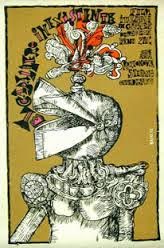
In these days, when so many truths are coming to light, but when accountability does not come as a consequence so clearly or strongly, the memory of my favourite book comes back every time. My favourite book is not a big romantic drama or a deep Russian novel. The book that I was dreading to end, when I read it, maybe 20 years ago is Italo Calvino's The nonexistent knightI remember turning each page with a mixture of eagerness and regret of leaving each page behind. I have to read it again.
  
Let me explain why I think of this book, when I read about the US Senate report of tortureThere are a few passages that come to mind: one is the very beginning when Charlemagne was reviewing his paladins shortly before going to battle. He goes through them one by one, asking who they were, where they came from, who were their parents. Until he reaches the last of these knights. A knight in a bright, clean, unscratched white armour. After presenting himself, Charlemagne asked him to raise his visor and show his face. But the knight wouldn't do it. Charlemagne asked why. He responded "Sire, because I do not exist". He then revealed that the helmet was in fact empty. "How do you do your job, then, if you don't exist?" asked Charlemagne. "By will power and faith in our holy cause", Agilulf, the non existent knight replied. He was the model soldier, a bureaucrat that followed all the rules and procedures to the point and was always right. No one liked him. It came to be when a name, a rank, some duties and a story somehow condensed into an armour.

I don't think many people were surprised by what the torture report said. Even if we did not know the details, somehow we all knew. Guantanamo bay, extraordinary renditions, secrecy, no legal framework or accountability, some precedents like the School of Americas... come on, we all knew the Emperor was naked. What it was novel in this piece of news is the US saying it to itself. It was the admission itself. The "becoming aware of it". Now it's "out there" (see the RSAnimate below from a talk by Steven Pinker on language and what he says about mutual knowledge).


It is indeed difficult to face our shadow, particularly when we have spent years projecting it to others and pointing our fingers at them. So difficult it is, that we create a carefully crafted narrative that swirls around the unspeakable truth. The words of the President of the committee were somehow of a higher consciousness "Torture goes against the very soul of our country" and relating the greatness of the country with the ability to face these facts. The reaction of the republican Senator John McCain, victim of torture himself, was probably the most poignant when he said "enhanced interrogation methods stained our national honor". However accountability is still not on the table. Some empty armors did it. And Americans seem to be ok with this. If one piece of news was US admitting what everyone knew they were doing, the second piece of news is that it did not cause any major reaction

The second passage of the book that comes to mind is when Charlemagne was warning Torrismund that due to the fact that he was born out of wedlock, he would lose his rank. He should get his father to recognise him. "I can never be recognised", 'My father was no man". Charlemagne asked "Who then?". Torrismund replies "'Tis the Sacred Order of the Knights of the Holy Grail". Then he told the story of how his mother met the knights and spent a lot of time with them, until she became pregnant. Charlemagne saw the problem: "The Knights of the Holy Grail have all made a vow of chastity and none of them can ever recognise you as son". Torrismund then explained "My mother has never spoken about any knight in particular, but brought me up to respect as a father the Sacred Order as a whole".  Charlemagne then suggested "The Order as a whole is not bound by any vow of the kind. Nothing therefore prevents it from being recognized as a person's father". No one has fathered him. It was the Order. The Order did it. 
In this case, the CIA did it. Or the Bush Administration did it. And Obama's. Or the US did it. Let's turn the page. Never againLet's look forward. We are awesome.

But how can we avoid it to happen again if we do not explore the existence of these empty armours and the functioning of these Orders? If we do not truly look at them? If they do not look at themselves? Can empty armours and faceless Orders truly "see" other people as people? 

AB


Thursday, 4 December 2014

15. The absent father and our quest for freedom


The sense of how the social order works -and how to penetrate it- comes with the male side in our family: our fathers or anyone fulfilling a father role. They are the ones that invite us to go outside the world of mum to conquer other lands, we learn discipline (love is expressed in "doing" and completing something) and to rule ourselves; all of which gives us the sense of self-mastery and freedom. In a home with an absent father (or father figure), it is more difficult to separate the children from the mother. This may result in extreme frustration, even disgust, particularly in males who unconsciously occupy the male role of the house.

Fatherhood, and absent fathers in particular, has been a topic President Obama talked about in several occasions (there are several videos in YouTube), speaking a lot from his own experience of the challenges of growing up without a father:


In the most extreme situation, an unbalanced masculine (its absence or uber-dominant presence) can be destructive over the unbalanced feminine (the mother, the system). History has seen this at social level in the form of fascism, which represents a violent response against the feminine principle. 

This is somehow told in Pink Floyd's The Wall: the protagonist goes through childhood with an overprotective mother (unbalanced feminine, unable to see and feed the individuality of the child), a rigid school and an absent father. In this context, his Ego creates an internal fascist dictator, seeking to counter-balance the oppressive environment in which he lived, that was extremely invasive. In the film Pink, the child, the ashamed, the wounded, the unseen by the people that were supposed to see him, unfed with attention to his individuality, and unable to separate from the mother, gets replaced by the unbalanced masculine, a fascist persona who performs this separation with violence, and in a twisted manner reclaims what he did not get as a child: the unconditional maternal love and attention (that's not the same as control) in the first place and the paternal order and notion of freedom later on. 

This persona incarnates the power without the love, "the all for one"  without "the one for all"; still merged with the maternal, he fears his own masculinity cannot be expressed and see 'queers' as a reflection of this fear (his shadow); it objectifies all (because he had been objectified), judging, labelling and discarding, particularly women that now should be at his service.

But this fantastical story was inspired by his (and Syd Barrett's) own life, with the anger he felt growing up without a father:


In this video (it's only 4:46 so, worth watching), the philosopher Slavoj Žižek speaks about Freedom and more interestingly for this post, false freedom. 


From this, I'd to highlight a couple of passages:
"The most dangerous form of non freedom is the non freedom which is not even perceived as such.
Then there is another form of freedom, which I think has a disastrous impact and we shouldn't underestimate. I met at some point in Belgrade in the late 90s, when Milo
šević was still in power, some probably ethnic cleansers, nationalists. And -I'm even ashamed now for doing this- I got in conversation with them. And they gave me a wonderful short lesson on how nationalist fundamentalism worked. They told me "We experience your western liberal world as over-regulated... you know, you are all the time bombarded by messages of be political correct, don't be a racist, be careful what you eat, disciplined yourself and so on and so on.". And they told me openly "I want to eat whatever I want, smoke, I want to steal when I want I want to beat women, rape them and so on. Becoming a nationalist, doing some ethnic cleansing gives me this terrifying freedom".
This is why I was not surprised when I heard that in the area of Irak and Syria controlled by Isis, it is not just religious fundamentalism, there are also gang rapes, tortures, freelance killings and so on.
You see. This is the problem with fundamentalism. It is not just that there is no freedom. There is also this kind of false freedom. The explosion of this obscene freedom. For me the highest form of freedom is love. Here I'm a pathetic old romantic."
In the mystery of how the Islamic state recruits so many Europeans, we need to start to recognise how this seed of anger is implanted to then understand why it gets attracted to a promise of false freedom, so we can treat it differently. On the one hand: either a toxic mother or lack of a soothing mothering figure, on the other hand the absent father so no one is negotiating a detachment with the development of self-sufficiency and self-mastery. When not in the extremes, the separation from the mother does not require violence, but it tends to require a "masculine" force. That's why Princesses liberation from the mother -the stepmother being the shadow of the actual mother-, requires finding a Prince with a spade -the prince being their internal masculine-. 

However, after so many dictators, orphans turned terrorists, destructive regimes, drug addicts; after so many philosophers, spiritual leaders, politicians, movies like Star Wars, and Lord of the rings -to name a very popular couple-, after so many artists who all talked about this very subject, we still don't fully recognise the anger into the spectrum of human behaviour. Afraid of it, we demonise it. And because of this lack of acceptance, we leave people with this anger to explode or what it is even worse we let them be led by people who promise to unleash it. 

Anger is an emotion that is very useful, in fact. In a culture where only the rational is good, emotions are not acknowledged nor understood. They are simply judged, normally as something of an inferior nature. However, anger helps us build the strength to defend ourselves and our limits. With this I don't mean to condone violence, but rather pointing out that anger is an important, valid and useful emotion if it can be fostered to energise a constructive purpose. 

Rebelling 

When the official narrative is oppressive it is because it lacks self awareness (it does not see itself, it does not recognize its own failings),  and is fatherless: it lacks an equal force that limits the power of this mother-system to leave room for the individual to be and feel free. An oppressive system only leaves room to anti-system narratives and this initial natural anger to escalate into violence, the false freedom Žižek talked about.

Racism has long been unrecognised by the US institutions.


So it is probably because Barack Obama is the first black president, racism in America is more visible now than it's been for a few years. Most significantly, the racial tension and the bias of institutions against the African American community are being named, thing that did not happen for a while or at least not so clearly. 

First you see, then you name, both are significant and might be the first needed and painful steps towards a deeper change. 

However, while the system does not acknowledge this fact, and does not evolve into a father-led emancipation, it leaves room for the desperate violent separation. In Ferguson we can find a hint of this logic: one of the demonstrators -after demonstrating peacefully in August- concluded: "If we don't tear anything down, if we don't destroy anything, if we don't set fire to anything, they won't even pay attention"The New York protesters where highly allegoric too with their signs and chants "I can't breathe" these final words from Eric Garner quickly became their cry for freedom

The racial conflict in America won't go away, and won't be resolved but with the full transformation of society. We are all part of the context, we all build the "them, us" model. 


Here is where Obama in his symbolic paternal position could've helped to guide the change needed in the institutions, however, as the article in Der Spiegel "Racial divide: the tragedy of America's first black president" describes, the prevailing sentiment is of disillusionment.  

The final part of Slavoj Žižek video speaks says:  
"The lesson is true freedom means looking into and questioning the presuppositions of everything that is given to us by our hegemonic ideology. And by ideology I don't mean here, some explicit teaching, simply the way in our daily lives we experience our reality. To question everything including the notion of freedom itself."
In our own quest for freedom, we need to find the father within: the one that can separate us from the whatever is our construction of a maternal narrative (the ideology coming from the many mothers we adopted in our lives: our country, a political party, a company, our actual mother, etc); the one that can help us build discipline and self mastery and navigate the journey of "we love, we hate, then we become". So the systems we create and sustain will have also a father within, the one able to restrain the system itself and better negotiate the balance between the individual and the whole.

In this video, Russell Brand (another public figure highly critical of the system), who also spoke about his absent father, proposes his father to have a boxing match, but mainly his aim is to get some form of healing in this staged measurement of his masculinity. He also discusses it with the psychologist David Cohen (author of The Father's book).


Almost at the end of this 10 min part 1, David Cohen praises Russell and his mum. "Your mum did definitely something rather right as the main caregiver", he says. "You want to find out about yourself. You are taking quite a lot of risks". This example is particularly good for many reasons, because an absent father does not mean the mother is powerless, but the work is more subtle. And secondly, because the culmination of a "patriarchal drive", the emancipatory movement, is to beat the father. The father symbolically dies just to mark the end of submission and that the father role has been integrated.  

This is important because this first questioning is purely ours (sometimes with the help of self-aware mother). Following the path that leads us to the answers does not depend on anyone else, it does not depend on heroes or demons we find in the world. If it happens, if we find the father within, it will enable us to make new decisions, and then we are free(r), we become our rulers.
This process cannot be reversed and if many go through it simultaneously will emerge in society too, with better systems, that are self aware and have a Good Father within, to ensure that everyone has the right to feel safe, be cared for, looked after and free.

We might need a bit of resilience. 
And patience.

AB

PS: did I mentioned that J.R.R Tolkien lost his father when he was 3?
PS2: A "dad" made it tenth most popular Christmas list request for children
PS3: Absent fathers in music: Papaoutai by Stromae (Papa where are you?)


Lyrics in French
Lyrics in English


If you liked this article, have a look at:

-The absent mother
-Women: invisibility or blindness?

External links:
Anne Manne, The Guardian: Narcissism and terrorism: how the personality disorder leads to deadly violence
Der Spiegel, Racial divide: the tragedy of America's first black president
Der Spiegel, Terror from the fringes: searching for the answers in the Charlie Hebdo attack