Showing posts with label responsibility. Show all posts

Thursday, 11 December 2014

16. I'm not responsible because I do not exist

In these days, when so many truths are coming to light, but when accountability does not come as a consequence so clearly or strongly, the memory of my favourite book comes back every time. My favourite book is not a big romantic drama or a deep Russian novel. The book that I was dreading to end, when I read it, maybe 20 years ago is Italo Calvino's The nonexistent knightI remember turning each page with a mixture of eagerness and regret of leaving each page behind. I have to read it again.
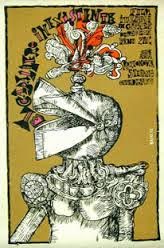
  
Let me explain why I think of this book, when I read about the US Senate report of tortureThere are a few passages that come to mind: one is the very beginning when Charlemagne was reviewing his paladins shortly before going to battle. He goes through them one by one, asking who they were, where they came from, who were their parents. Until he reaches the last of these knights. A knight in a bright, clean, unscratched white armour. After presenting himself, Charlemagne asked him to raise his visor and show his face. But the knight wouldn't do it. Charlemagne asked why. He responded "Sire, because I do not exist". He then revealed that the helmet was in fact empty. "How do you do your job, then, if you don't exist?" asked Charlemagne. "By will power and faith in our holy cause", Agilulf, the non existent knight replied. He was the model soldier, a bureaucrat that followed all the rules and procedures to the point and was always right. No one liked him. It came to be when a name, a rank, some duties and a story somehow condensed into an armour.

I don't think many people were surprised by what the torture report said. Even if we did not know the details, somehow we all knew. Guantanamo bay, extraordinary renditions, secrecy, no legal framework or accountability, some precedents like the School of Americas... come on, we all knew the Emperor was naked. What it was novel in this piece of news is the US saying it to itself. It was the admission itself. The "becoming aware of it". Now it's "out there" (see the RSAnimate below from a talk by Steven Pinker on language and what he says about mutual knowledge).


It is indeed difficult to face our shadow, particularly when we have spent years projecting it to others and pointing our fingers at them. So difficult it is, that we create a carefully crafted narrative that swirls around the unspeakable truth. The words of the President of the committee were somehow of a higher consciousness "Torture goes against the very soul of our country" and relating the greatness of the country with the ability to face these facts. The reaction of the republican Senator John McCain, victim of torture himself, was probably the most poignant when he said "enhanced interrogation methods stained our national honor". However accountability is still not on the table. Some empty armors did it. And Americans seem to be ok with this. If one piece of news was US admitting what everyone knew they were doing, the second piece of news is that it did not cause any major reaction

The second passage of the book that comes to mind is when Charlemagne was warning Torrismund that due to the fact that he was born out of wedlock, he would lose his rank. He should get his father to recognise him. "I can never be recognised", 'My father was no man". Charlemagne asked "Who then?". Torrismund replies "'Tis the Sacred Order of the Knights of the Holy Grail". Then he told the story of how his mother met the knights and spent a lot of time with them, until she became pregnant. Charlemagne saw the problem: "The Knights of the Holy Grail have all made a vow of chastity and none of them can ever recognise you as son". Torrismund then explained "My mother has never spoken about any knight in particular, but brought me up to respect as a father the Sacred Order as a whole".  Charlemagne then suggested "The Order as a whole is not bound by any vow of the kind. Nothing therefore prevents it from being recognized as a person's father". No one has fathered him. It was the Order. The Order did it. 
In this case, the CIA did it. Or the Bush Administration did it. And Obama's. Or the US did it. Let's turn the page. Never againLet's look forward. We are awesome.

But how can we avoid it to happen again if we do not explore the existence of these empty armours and the functioning of these Orders? If we do not truly look at them? If they do not look at themselves? Can empty armours and faceless Orders truly "see" other people as people? 

AB


Wednesday, 12 November 2014

13. Demonising and idolising

Demonising and idolising are the same thing. It is the transfer of the bad and good inside to an external being or thing. We put the devil outside so, if we kill it, it will take away our own evil nature believing that this act of violence will be an expiation rather than a manifestation of it. We put the hero outside so if he is saved, we'll believe we are elevated too, without risking much or ever confronting our fears.
Both are mechanisms of delegation of power and a manifestation of the lack of ability to see: to see ourselves and to see others and accept responsibility.

We demonise food (only in a time and place where food is not scarce we can call any food "junk"). We demonise sugar, McDonald's, Coca Cola, carbs instead of our habits or our inability to take care of ourselves, learn what truly nourish us, see what's our hunger about and look for help when we need it.

We idolise celebrities, footballers, rock stars, actors, instead of exploring our internal need of being looked at, and giving ourselves attention. Attention is like money somehow. We pay attention, we steal attention. Trolls do something similar to celebrities but from a negative place: they are stealing attention back in an aggressive manner.

We demonise the other, the immigrants that come to steal our jobs and our resources claiming benefits without recognising our own invasive attitudes, history or that we are accepting to play a game, but blaming the rival for the result.

We idolise the rich, believing they feel fulfilled, that they "own themselves", instead of looking at our inner hole and thinking what makes us feel empty and poor. In this chat, it is explained how even people belonging to the top 1% of society keep looking upwards without recognising their own wealth and feeling they do not have enough (or as much as the other).

We demonise dictators, with the need of elevating them to some sort of evil deity level because thinking of them as people would call for the reconsideration of our own obedience or recognition of our own capacity for violence and cruelty.

We idolise cool people, the sort of Steve Jobs, and we buy an Apple product hoping that some of this coolness will be spilled over us without thinking why do we need a white computer to feel good about ourselves.

We demonise people that believe "we are not right", because we fear that the system of beliefs we sustain is what defines us, so if we are not right, then what? We die? Protestants and Catholics (or Unionist and Nationalists) are still separated by a wall in Belfast, Sunnis and Shias are fighting right, centre and left, atheist think that people who believe in God are stupid. Communists and capitalists can equally use the antagonist word as an insult.

Some use and exacerbate these transfer mechanisms to concentrate power and wealth. Idolise me and give me your money. Idolise me and buy the products I endorse. Demonise him and surrender power to me so I can fight him.

When we are not connected with ourselves and our inner feelings, we don't connect with our own power and surrender it to a Idol/Hero to go and fight the devil in our name. 

However, sooner or later we'll realise that no one can do any of these things for us.

AB

Wednesday, 17 September 2014

9. The sharp edge of the ballot paper

Selfishly I find Scottish referendum debate is a thing of beauty, a thing of this day. But of course, I'm just an observer, I don't have to make such decision myself. Every layer of it brings all sorts of modern age topics and questions. No matter what's the result tomorrow, the exercise of deciding whether they want to stay as a part of the UK or declare Independence has already changed many things.
For a country-that-never-had-a-revolution, this is a quite close version of it. Civilised, of course, it's British. The velvet revolution, they call it. Civilised, even if -after the vote- some steam might need to get out.

From the political point of view, allowing a “yes/no” vote has been a big bet. But it is indeed effective in splitting waters. When we need to make a decision like this, we are forced to set a hierarchy to values that we did not know had a hierarchy. The sharp edge of the ballot paper will separate Scotland from its past. If they decide to stay or to leave, it will be their active decision of today. It will be no longer be the past defining their future. It will be their votes.

The first point about claiming power back is that it comes with responsibility. Which is great. There won't be a greater power to blame.
The second is accepting the discomfort it will generate. Firstly, it will have to reconcile itself with the winning decision, and in this case around 50% of the people will be disappointed. Making a decision confront us with a new knowledge of ourselves at the point that we may not recognise ourselves. Did we really had the opportunity and did not take it? Did we really leave the UK?
Their own tolerance, self-respect and self-love will be put to the test the day after.

Whatever the result, it is a great attempt to re-democratise politics, which lately has been too monotone, more concerned about engineering consensus around an already established agenda than taking countries -and their people- forward. It has reignited a spark (even in Gordon Brown). Any union that “counts” with a member to be silent or weak or who is taken for granted, does not work.
However, “leaving the clan” to start your own hero journey can be exciting, but does not guarantee it will be easy. Beyond the separation bureaucracy, becoming a small dog in the pack will be indeed different. A full hero's journey awaits and it will be full of dragons, ogres and trials.

Whatever Scotland decides, I wish them the very best.

AB